


Flowers and music, what’s the connection? From ancient rain dances to Beethoven’s Symphony No. 6 “Pastoral” to Poison’s Every Rose Has Its Thorn, artists and composers have long used floral motifs to capture the essence of sound and emotion. But what makes flowers such a natural pairing with music, visually and conceptually? And why, in the modern age, do so many album covers have floral imagery?
We’re going to ruminate together on that through AFLOWERCOVER.
What is AFLOWERCOVER?
@aflowercover is the space where Jessamine pays homage to the albums and cover art we adore. Every first Tuesday of the month* (coming soon), we’ll be releasing a unique floral arrangement inspired by an iconic album and its cover art. We’ll blog, we’ll chat, we’ll analyze, we’ll listen to the music and we’ll even deliver those flowers right to your Monmouth or Ocean County, NJ doorstep the following week.
First up? The legendary garden roses of Power, Corruption & Lies.
NEW ORDER
POWER, CORRUPTION & LIES
Cover Art: Peter Saville
Is A Basket of Roses the most recognizable use of a floral still life in connection to music? I think so.
New Order is an English New Wave band formed by the original members of Joy Division after the tragic death of singer Ian Curtis in 1980. Where Joy Division zigged, a bleak and brooding sound; New Order zagged into the wilds of synth-pop, pioneering the unmistakable sound of 80s electronic and house music. Their efforts paid off big time. Blue Monday, a companion single to Power, Corruption & Lies, became the best-selling independent 12″ single of all time. Decades later, it’s still a bop, finding its way to virality on TikTok, and cementing its place on just about every “Best of the 1980s” list out there.
Power, Corruption & Lies, New Order’s second album, was released on May 2, 1983 by Factory Records label. Peter Saville was Factory Record’s cofounder and inspired art director.
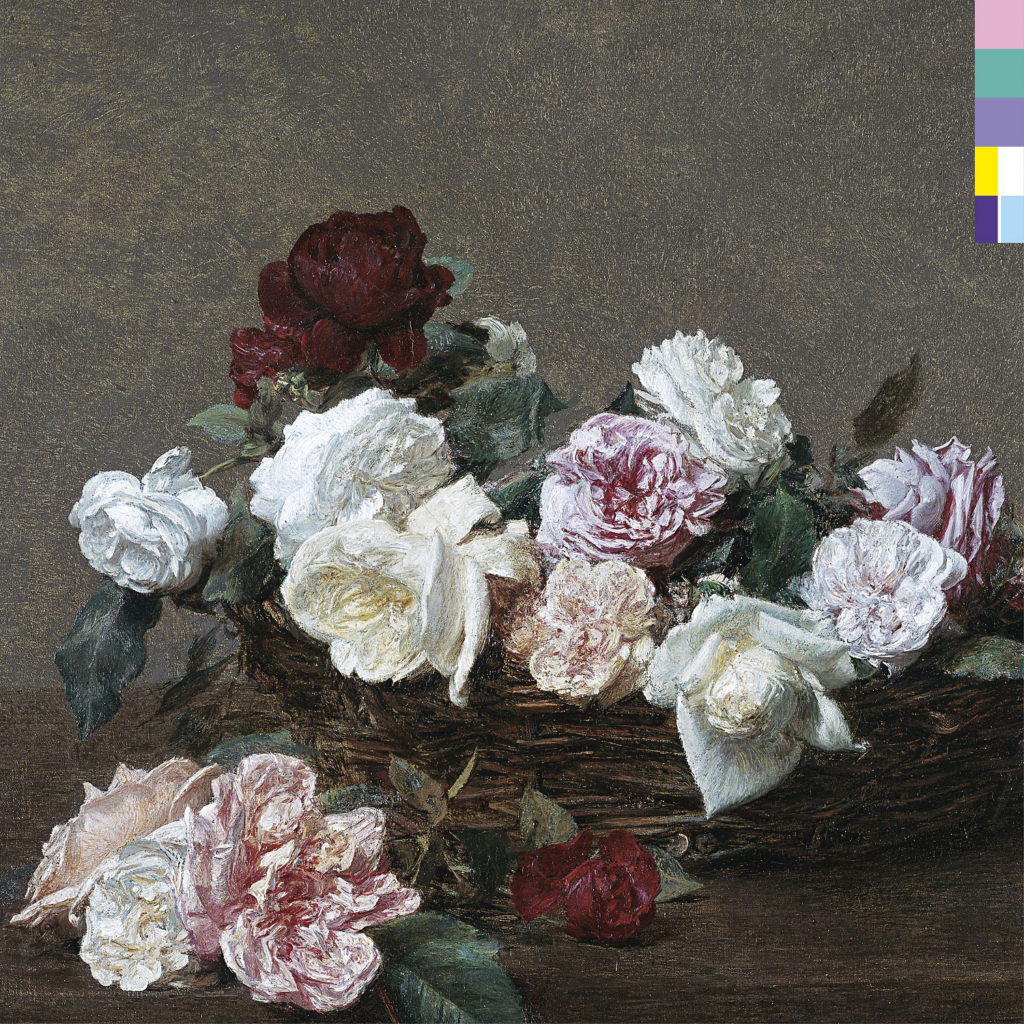
Power, Corruption & Lies features a reproduction of a still life painting of a basket of garden roses and color coded squares.

What is a still life?
The still life featured on the Power, Corruption & Lies cover is an 1890 oil-on-canvas painting by Ignace-Henri-Théodore Fantin-Latour. A French painter and lithographer celebrated for his floral and portrait works, Fantin-Latour’s choice to focus on flowers wasn’t just an aesthetic decision, it was rebellious. At the time, the Art World had a strict hierarchy of subjects that was considered worthy of painting, and still lifes were low on the list. Yet, Fantin-Latour chose to paint a simple basket of garden roses elevating the “lowly” still life to something that feels extraordinary.
A still life is a representation of different objects—often flowers or fruit—arranged to tell a story. Sure, a flower can be just a flower, but in a still life because the artist chose to depict a flower, it’s a symbol; a clue. Is the flower just budding? Or is it wilted and fading? With these details carefully considered, the chosen objects can form a narrative, sparking questions like: What do these items say about the artist? Why are they important to the artist or the world at large?
In the 1800s, still lifes often celebrated life’s little luxuries, made possible by the global trade boom that introduced new-to-Europe spices, flowers, fruits and decorative homeware, such as pottery and linens. But sometimes, they were simply about finding beauty in the everyday: a handful of blooms from a garden, an arrangement of odds and ends that caught the artist’s eye. Whether luxurious or humble, still lifes invite us to pause, reflect, and maybe even see the ordinary in a whole new light.
Back to A Basket of Roses. Red, peach, pink, white and cream garden roses at the peak of bloom are casually placed in a wicker basket, as if just clipped from the garden and brought inside. Some of the flower heads spill out and over onto the table. The sumptuous colors of the realistically depicted roses pop against the warm earthy brown background.
For Power, Corruption & Lies, Saville crops Fantin-Latour’s painting, adjusts the color grade to have a more pallid white balance, and adds a curious collection of unnatural colored boxes in the top right hand corner.
So why did Saville think a slightly altered 1800s painting of a basket of beautiful roses could accurately convey the subject matter explored in Power, Corruption & Lies?
In his words from The Guardian: “The title seemed Machiavellian. So I went to the National Gallery looking for a Renaissance portrait of a dark prince. In the end, it was too obvious and I gave up for the day and bought some postcards from the shop. I was with my girlfriend at the time, who saw me holding a postcard of the Fantin-Latour painting of flowers and said, ‘You are not thinking of that for the cover?’ It was a wonderful idea. Flowers suggested the means by which power, corruption and lies infiltrate our lives. They’re seductive.”
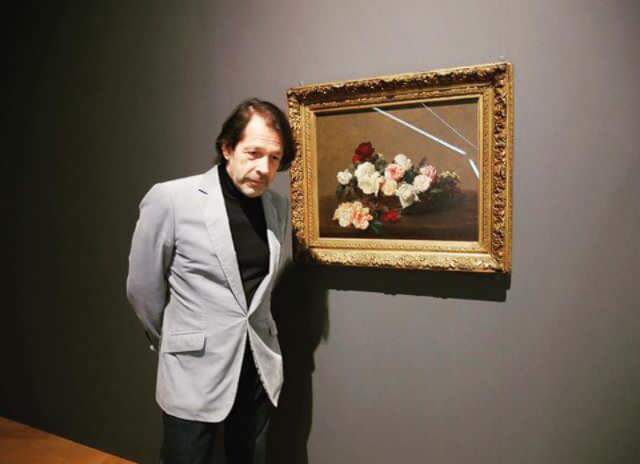
Saville is saying the roses aren’t just beautiful; they’re downright irresistible, much like the intoxicating smell of fresh-cut roses. You can’t help but stick your face into a rose and deeply inhale. Saville is suggesting that the allure of power is deeply rooted in human nature: grabbing for it can feel as simple and natural as plucking a fragrant rose from a basket. Yet, just like roses, power comes with its own thorny danger. Handle power carelessly, and you’ll get pricked—maybe even bleed. It begs the question: is the reward of power worth the pain of the lies and corruption it often takes to get there?
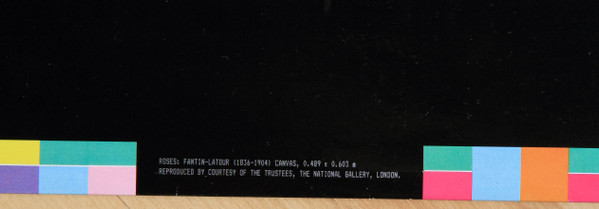
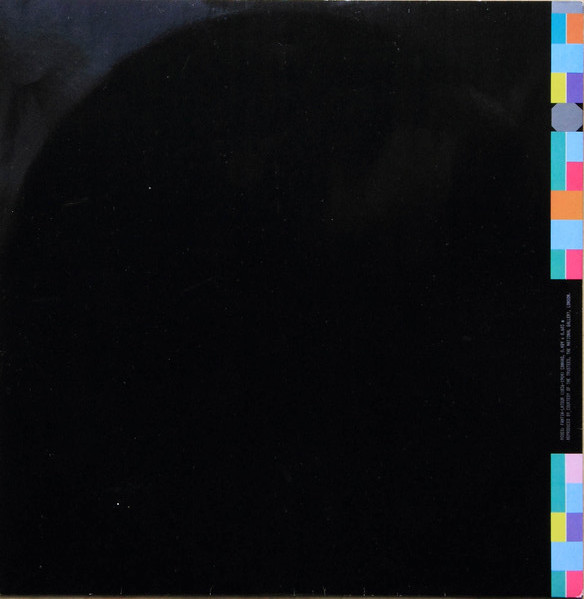
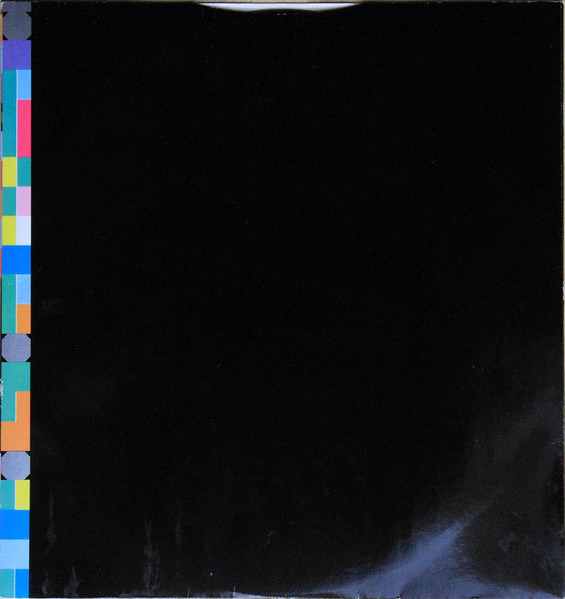
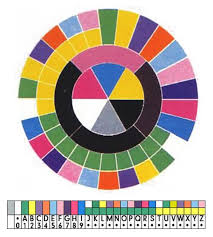
What’s with the blocks?
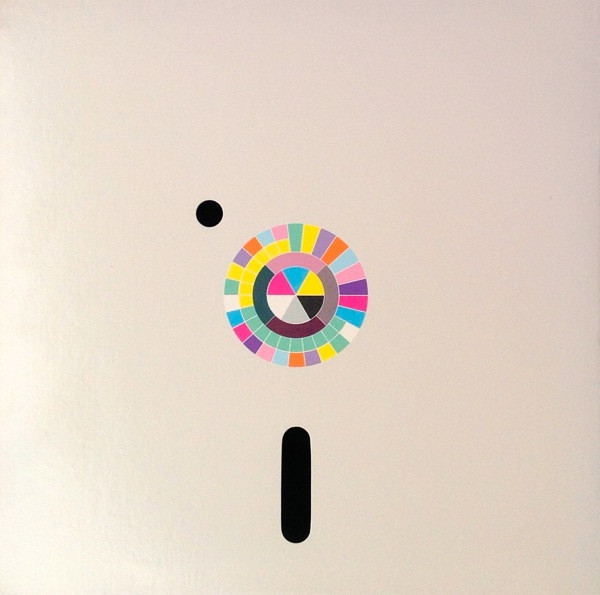
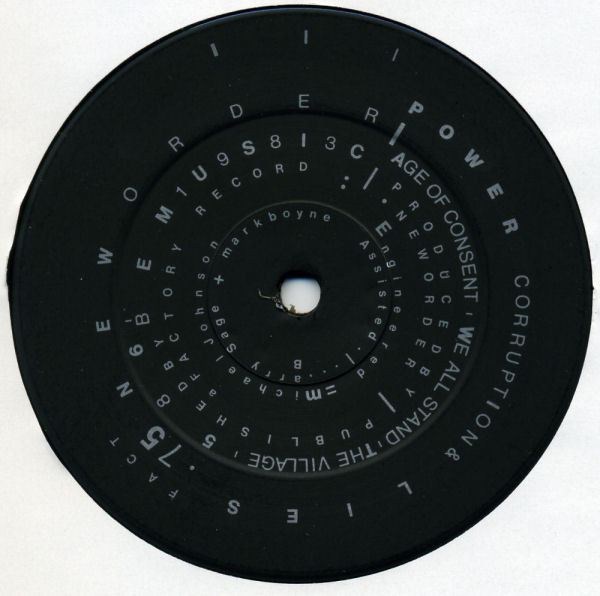
By juxtaposing a century old painting with ultra modern typography via the color coded blocks, Saville informs old with new. This may be a commentary on New Order’s second album sound, shedding their heavier rock roots to becoming club music innovators, or more broadly: disco and punk are dead and new wave is here. The blocks represent the band’s name and the title of the record which could be decoded by flipping the record over and looking at the back cover. This form of naming and cataloguing was used across several other Factory Records releases Saville designed. Using the blocks further supports the idea that power, corruption and lies are seductive. Their obliqueness draws you in to wonder what it could mean and if you want to know badly enough, deciphering the blocks forces you to engage with the work. This is the same way classic still life painting can engage or bore you.
Saville continues: “Tony Wilson had to phone the gallery director for permission to use the image. In the course of the conversation, he said, ‘Sir, whose painting is it?’ To which the answer was, ‘It belongs to the people of Britain.’ Tony’s response was, ‘I believe the people want it.’ And the director said, ‘If you put it like that, Mr Wilson, I’m sure we can make an exception in this case.”
Tony Wilson was right. The flower cover is instantly recognizable amongst a sea of floral still life and continues to inspire homages in many different media such as stamps, textiles, and clothing.
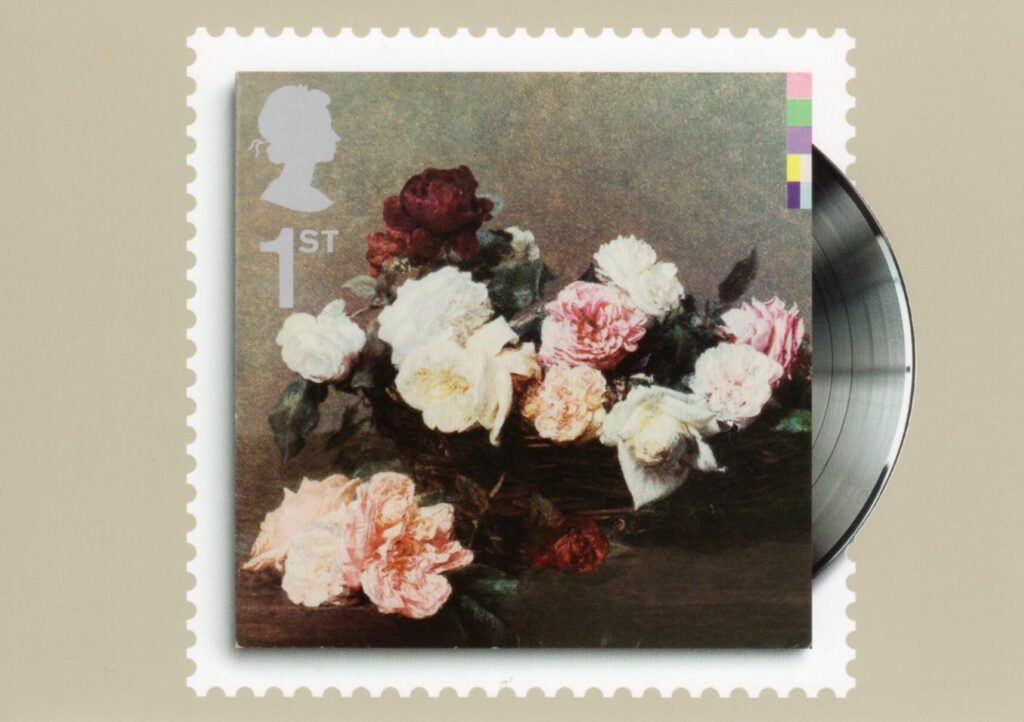


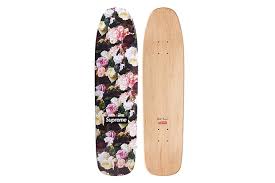
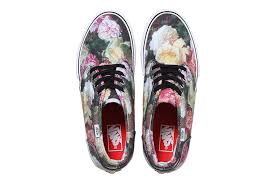
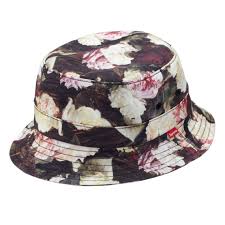
The interplay between music and visual art has always been a powerful way to convey mood, message, and meaning, and Power, Corruption & Lies exemplifies this union in a really interesting way. Peter Saville’s choice of Fantin-Latour’s A Basket of Roses for the album cover isn’t just a nod to the seductive beauty of flowers but a layered commentary on the complexities of human nature, power, and modernity. Beauty and power go hand in hand.
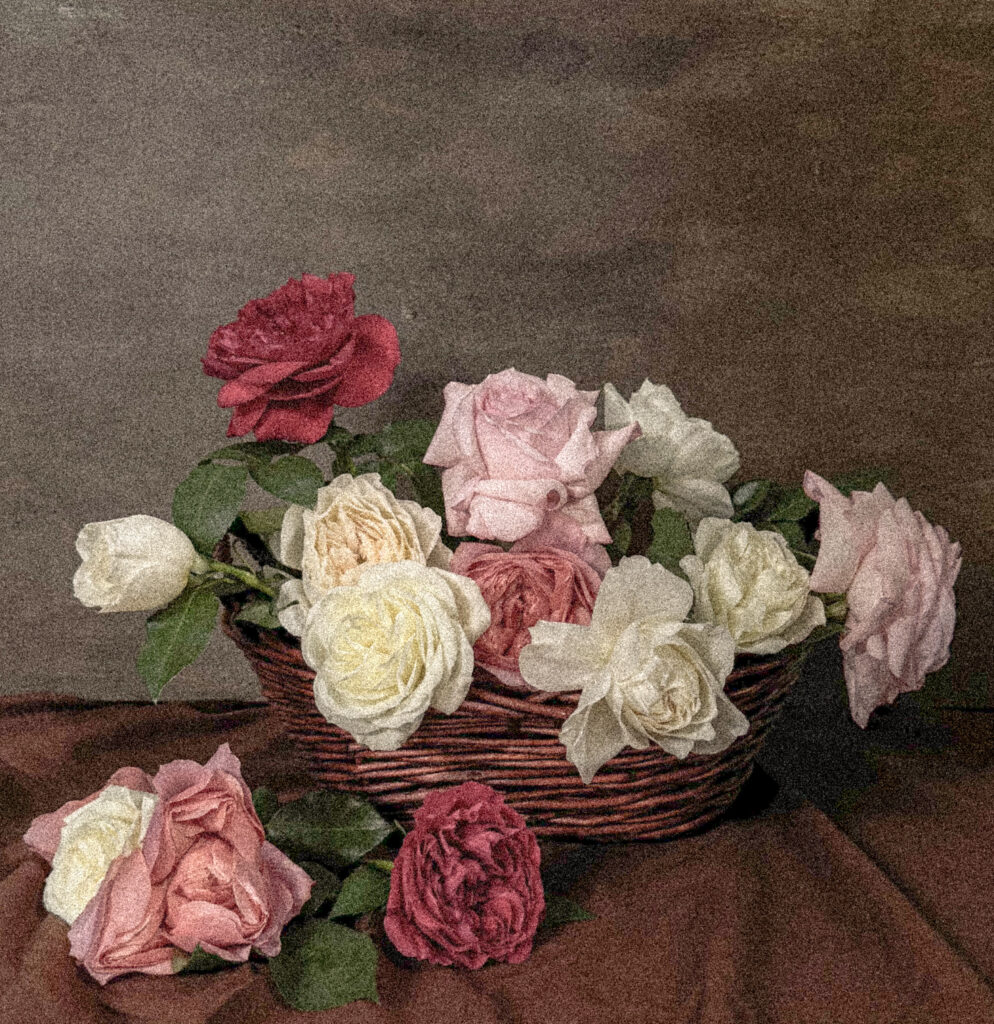
Through AFLOWERCOVER, we aim to celebrate these connections, exploring how timeless motifs like flowers continue to inspire across mediums. Join Jessamine as we dive into this rich conversation, one floral arrangement and one iconic album at a time.


